
Composite decking · Ontario

Find the right board.
Plan a better deck.

Compare composite decking brands, colours and live prices. Build a material list that fits your space and budget.

Real Trex deck with brown boards, wide stairs, glass railing and matching fascia beside a brick home
Trex deck · Delta Decks project archive More than just the boards

Include fasteners, stairs, trim and railing in your budget.

See the full quote checklist
Short answer

Is composite decking a good choice in Ontario?

Composite suits buyers who want less staining and a consistent finish. The right board still depends on sun exposure, budget and how the deck will be used.

Still considering wood? Compare wood against composite over ten years before choosing a material.

Send project details→
Where it works best

See how the space comes together

Start with how you will use the deck, then choose the board and finish.

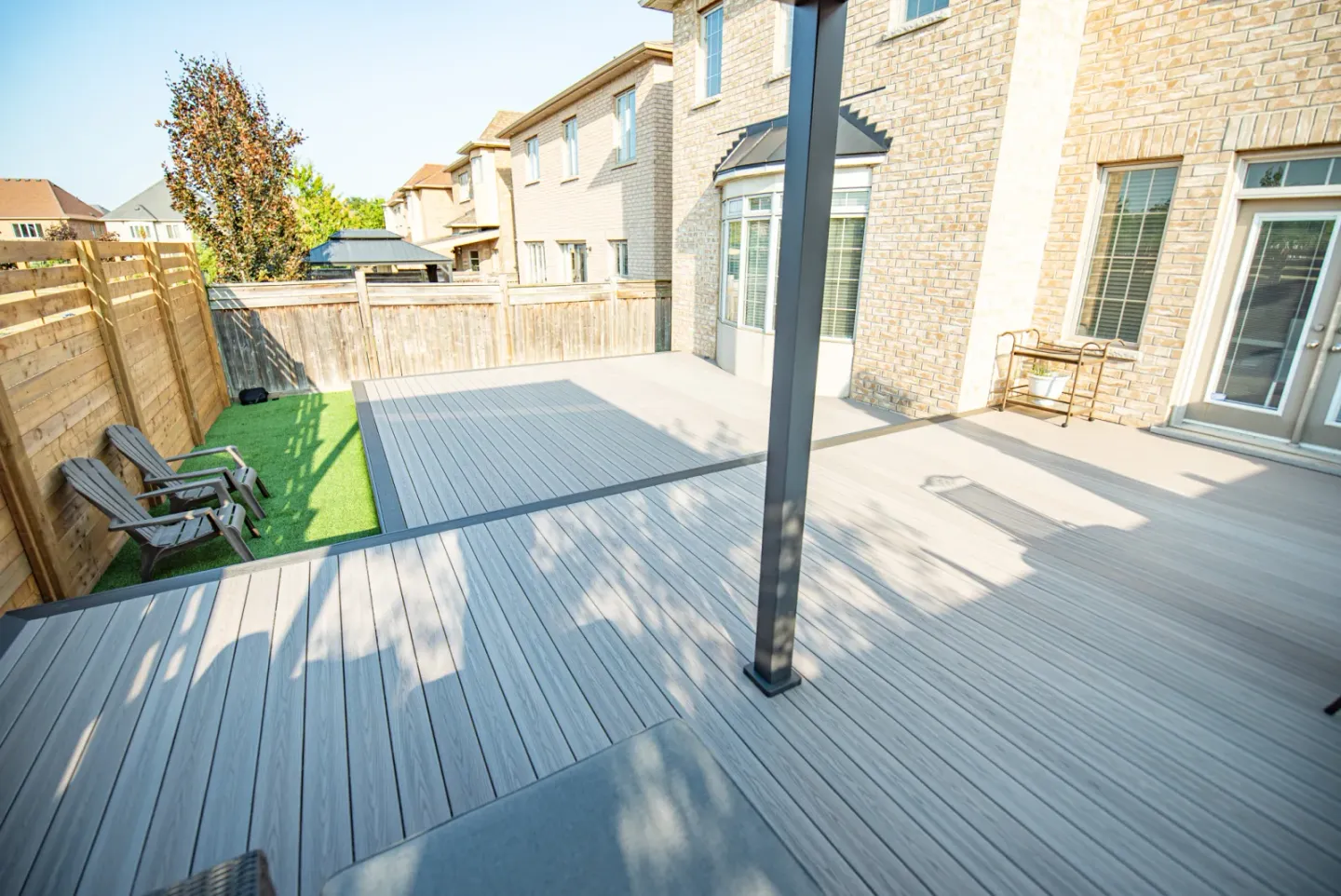
Grey Fiberon deck with an open walking surface, pergola and backyard seating
Family space · Fiberon

Room for everyday life

Plan clear walking routes, seating and a surface that suits daily use.

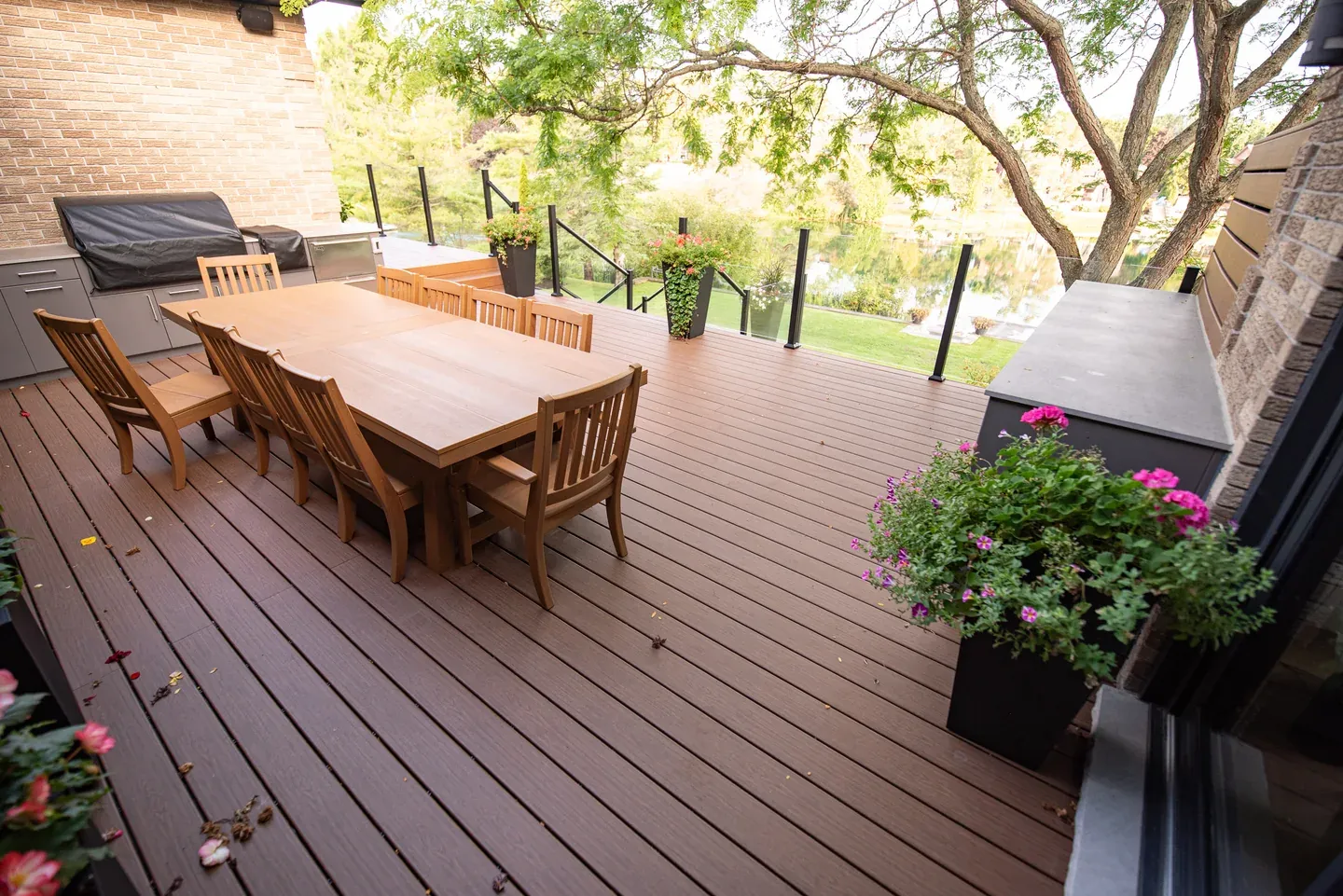
Brown Trex deck with a dining table, barbecue, wide board surface and glass railing
Outdoor dining · Trex

Make space to gather

Allow for chairs, the barbecue and access around furniture before counting boards.

Real projects from Delta Decks, our affiliated installation company. Less staining does not mean no upkeep: plan for routine cleaning.

Material choices

Choose your board type

Most buyers start with a brand name, but the better first question is how the board will be used.

Type Best for Watch for Material path
Budget composite Cost-conscious deck replacements. A cap on three sides instead of four, a shorter warranty, and tighter stringer spacing on stairs. See what the entry tier gives up
Mid-range composite Most family decks. Compare colour, board profile, and fasteners. Compare mid-range prices
Premium composite Higher-end finishes and long-term curb appeal. Higher material cost. Compare premium prices
PVC / advanced PVC Moisture-heavy or higher-performance projects. Different feel and price profile. Compare PVC and composite
Live prices

Compare current board prices

Choose a price tier, then a colour to compare board lengths and current store prices.

trex-basics

Current price at Composite Deck Shop
Board lengths

Open in Store

timbertech-prime-plus

Current price at Composite Deck Shop
Board lengths

Open in Store

fiberon-goodlife-weekender-composite-decking

Current price at Composite Deck Shop
Board lengths

Open in Store

trunorth-enviroboards

Current price at Composite Deck Shop
Board lengths

Open in Store

Composite Deck Shop prices as of Sep 29, 2026 · CAD, before tax and delivery

Board prices only, per board as sold. Fascia, square-edge boards for borders and stairs, fasteners, joist tape, railing and delivery sit on top — see the quantities and quote checklist below.

Ontario conditions

Plan for Ontario weather

Five local conditions, and what to do about each. Where two brands publish different rules, both are in the note.

Full sun

Test samples where the deck will be; with full exposure, colour matters as much as brand.

Maker noteDarker boards can feel hotter in direct sun.

Freeze-thaw

Plan joists, spacing, drainage and fasteners correctly — composite avoids rot, the frame under it does not.

Snow and ice

Use an all-plastic shovel and the ice melt your brand allows; rinse the residue when it is safe.

Maker noteTrex publishes “calcium chloride or rock salt”; TimberTech accepts calcium chloride but says to avoid rock salt and abrasive melts. A metal shovel or metal edge damages the surface.

Winter traction

Keep the surface clear of snow, ice and algae; texture, slope and cleaning all matter.

Maker noteTimberTech: decking “may become slippery in freezing weather.”

Cleaning

Soap, water and a soft brush, twice a year. Never oil, stain or seal.

Maker notePressure washing: Trex allows up to 3100 psi with a fan tip no closer than 8 in. on Transcend, Enhance and Select; TimberTech's 2026 guide treats it as rinsing only, fan tip, 1,500 psi maximum.

Board anatomy

Read the board, not the brand

Check the cap, edge and underside. These determine fastening options and installation requirements, even within one brand.

Three specification lines on a composite deck board. The cap sets the warranty tier: four-sided sits in the 30-year tier and is rated BETTER for moisture, three-sided in the 25-year tier and rated GOOD. The edge sets the fastener: a grooved edge takes hidden clips and leaves nothing on the face, a square edge is face-screwed or plugged. The bottom sets what else fits: a solid bottom accepts plug fasteners and a drink rail, a scalloped bottom accepts neither and needs support under stair treads.
Cap coverage, warranty terms and the moisture ratings are TimberTech's own 2025 collection chart; the fastener and stair rules are the Trex and TimberTech installation guides. Amber marks the option that limits what else you can buy.
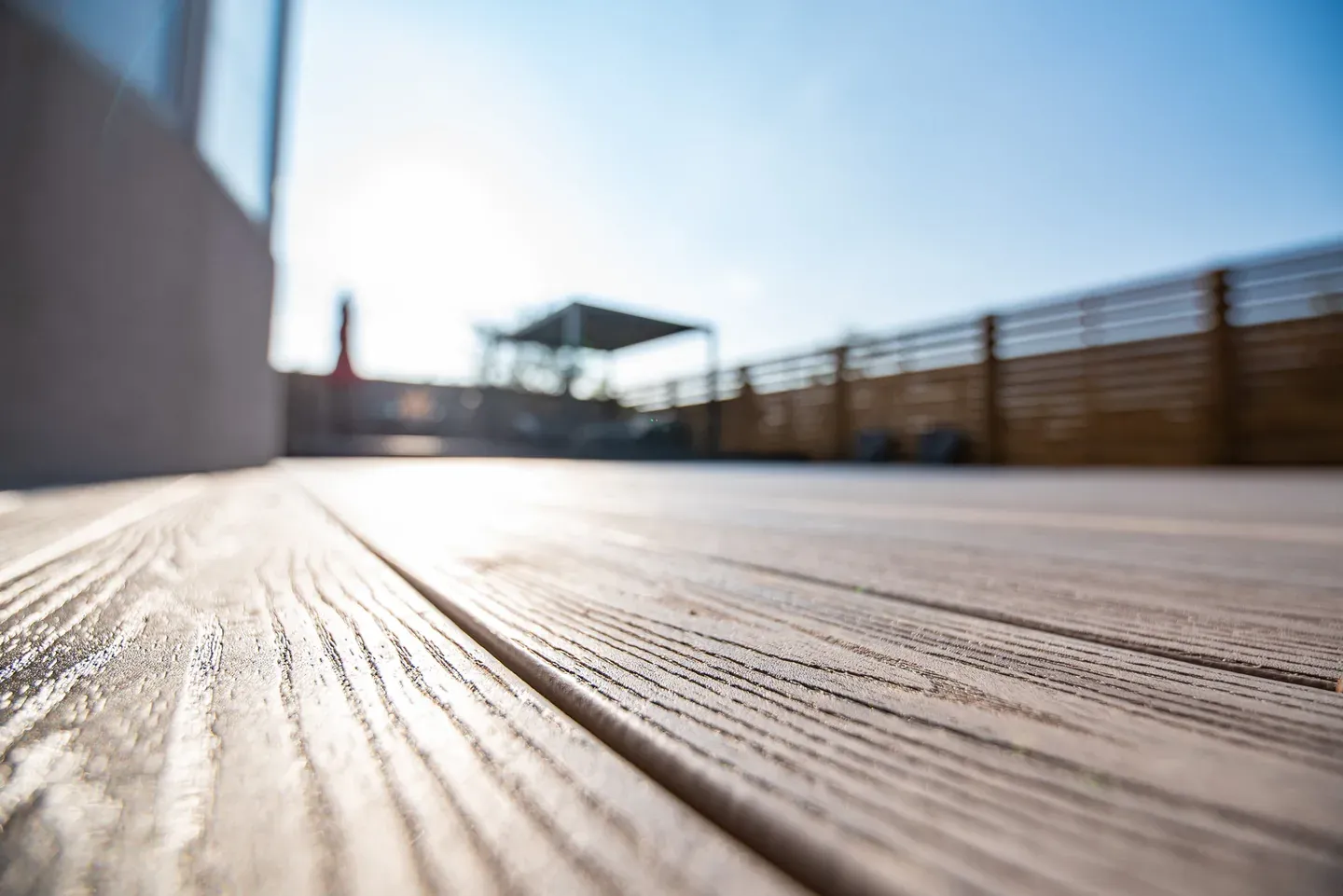
Close view of Fiberon board grain and the gap between installed boards in sunlight
Texture in real sunlight. Fiberon project from the Delta Decks archive; compare physical samples for your chosen colour.

Check before you order

Cap coverage & warranty

It is the factory shell co-extruded over the core, and TimberTech's collection chart puts Legacy, Reserve, Terrain+ and Terrain in the four-sided group with a 30-year product and fade warranty, against Prime+, Prime and Premier on three sides with 25 years. The moisture row drops from BETTER to GOOD at the same step, and a footnote adds that the cheaper cap does not carry the brand's Mold Guard technology. Fiberon says it in one line about Good Life: “Three-sided cap layer helps resist staining and fading.”

Edges & compatible fasteners

Fiberon's own descriptions are the clearest on the market: a grooved edge is “Designed for use with hidden deck fasteners”, a square edge is “Designed for surface fastening. Use for stair treads and for picture framing.” Most decks need both — grooved boards through the field, square-edge boards for the border and the stair treads.

Scalloped boards: limits to check

Trex's installation guide is blunt: “Do not use any hidden fasteners that are plug based with Trex Enhance profiles with scalloped bottom.” TimberTech excludes the same profiles from Cortex and from its Drink Rail, and requires Terrain, Prime and Prime+ to be used “as a veneer in a stair tread application.” Stair stringers tighten too — Trex publishes 12 in. for a Transcend 1×6 and 9 in. for a scalloped Select or Enhance board. Using a fastener the manufacturer does not recommend can also void the warranty.

Go beyond the colour swatch. Our guide to selecting decking materials covers the full order, while budget composite decking explains the entry-tier trade-offs.

Quantities

Build your material list

Measure the deck, allow for cutting waste, then add fasteners and finishing pieces. Use the requirements for your exact board.

Five steps from a deck size to a composite material order: measure the walking surface including stairs and landings; choose the board length from the standard 12, 16 and 20 ft; add the waste factor the maker publishes, which is 5 per cent for Trex and 10 per cent for TimberTech; check the joist spacing, which sets the hidden-clip count as well as the framing; and add what is not a deck board, meaning fascia, risers, screws and railing.
The two waste factors are each manufacturer's own published figure for its own boards. They differ by a factor of two, so this page prints both rather than averaging them into a third number that nobody publishes.

What changes the quantities

Allow for cutting waste

Trex writes that “the general rule of thumb is that you need 5% extra decking material to account for waste and mistakes.” TimberTech's installation guide says to “add roughly 10% to the total for a scrap factor” and works it into a formula. Use the figure for the brand you are actually buying, and expect the higher end when the deck has diagonals, borders or a lot of stairs.

Joist spacing & clip quantities

TimberTech publishes 16 in. on centre for a straight layout and 12 in. for a diagonal one, adding that more severe angles may need closer spacing again. Fiberon publishes 16 in. perpendicular for Good Life, dropping to 12 in. at angles and under stair treads. Trex deducts 4 in. from its span chart at 45° and half the listed distance at 30°. Closer joists mean more framing lumber and more clips: TimberTech's FUSIONLoc is packaged “for 225-square-foot and 450-square-foot, at 16" O.C.”, so the coverage printed on the box assumes the wider spacing.

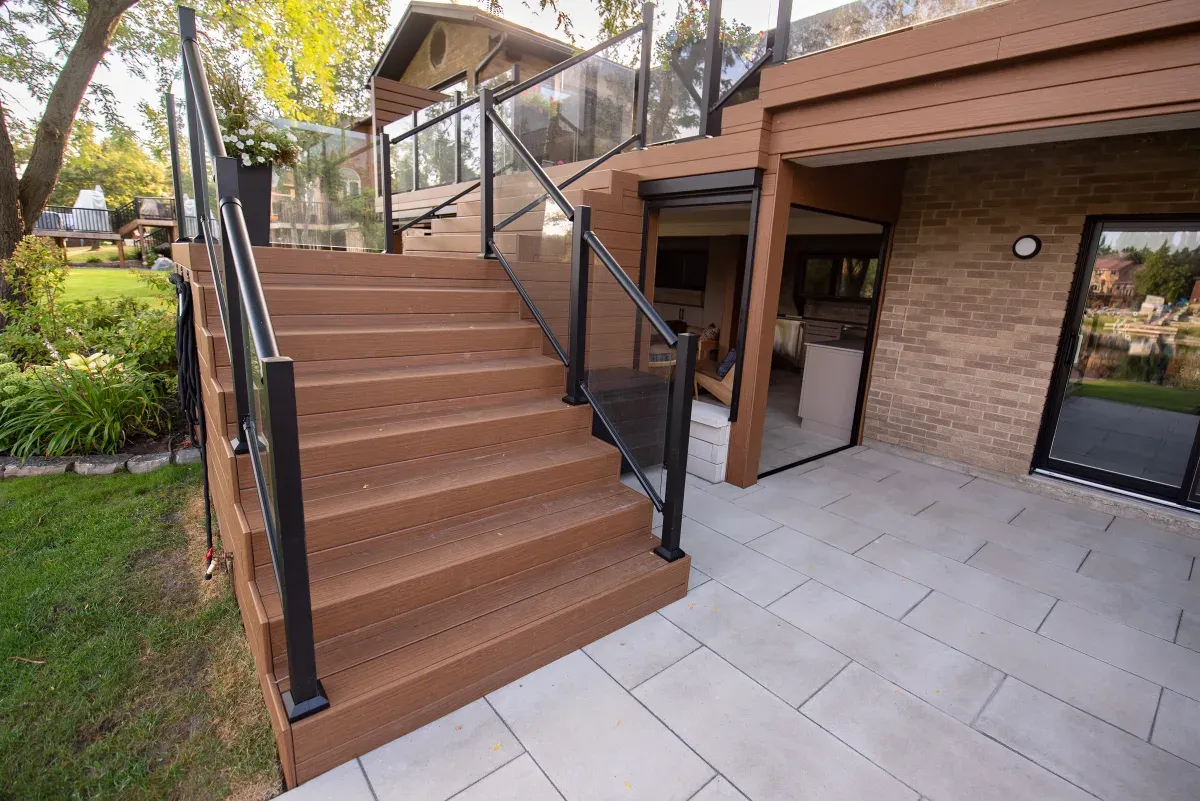
A wide composite stair flight with a glass guard, running down from a raised deck to a paved patio beside the house
Stairs, borders and fascia are where a board count and a material list separate — none of that surface is in the deck's square footage. Photograph: Delta Decks.
Budget for the frame separately

Composite is a surface, not a structural material. TimberTech states it plainly — the board is “NOT intended for use as columns, support posts, beams, joist stringers or other primary load-bearing members” — and every Canadian evaluation of these boards says the same thing in its own words. The structure under a composite deck is still lumber, and it is priced separately.

Everything that is not a deck board still has to be counted: fascia and riser boards, square-edge boards for the borders and stair treads, hidden clips, plugs and screws, joist tape, and the railing system. The deck railings hub covers that last one, which is a code requirement above 600 mm rather than a finishing choice, and selecting decking materials lists the full order end to end.

Quote checklist

What to include in your quote

If you already have drawings, photos, or rough dimensions, send them with the quote request.

Deck size or rough dimensions
Board brand or material preference
Colour preference
Grooved or square-edge boards
Stairs and borders
Fascia and trim
Hidden fasteners, plugs, screws, or clips
Railing type
Delivery or pickup location
Installation help if needed
Brands

Compare the brands

DecksToronto explains the differences. Composite Deck Shop handles current products, pricing, and checkout.

The live Composite Deck Shop collections are the authority on range, colour, length and price.

Material quote

Ready to choose materials?

Send your project size, location, material interest, and timeline. We can help estimate boards, fasteners, railing parts, and delivery needs.

Request material quote→
Shop products

Already know what you need?

Browse current decking collections, product pages, and checkout at Composite Deck Shop.

Shop composite decking
Installation

Need help installing the material?

Some buyers already have an installer. Others need help after choosing materials. DecksToronto can review your project first, then refer you to Delta Decks, an affiliated installation company, or another trusted installer depending on your location and project type. Our deck building services page explains how that referral works before you send anything.

Request installer referral→
Questions

Composite decking FAQ

The questions Ontario buyers actually ask, answered with what each manufacturer publishes. Where two brands disagree, both answers are here.

Does composite really look like wood, and what colours are there?

That is the one question a web page cannot answer for you. Colour and texture read differently outdoors than under showroom lighting, and differently again in full sun. Order samples through Composite Deck Shop, put them on the actual site, and look at them at the time of day you will use the deck. The live collections are also where the current colour range lives — any list published here would be out of date by next season.

Does composite decking scratch?

It can, like any deck surface. Trex publishes both the timeline and the remedy: scuffs and abrasions “can fade or disappear naturally after 12 to 16 weeks of weathering”, and that can be accelerated with a deck brightener containing oxalic or phosphoric acid. For a small scratch it names a clear sealer pen. Furniture with metal feet is the usual cause, so pads are cheaper than the fix.